
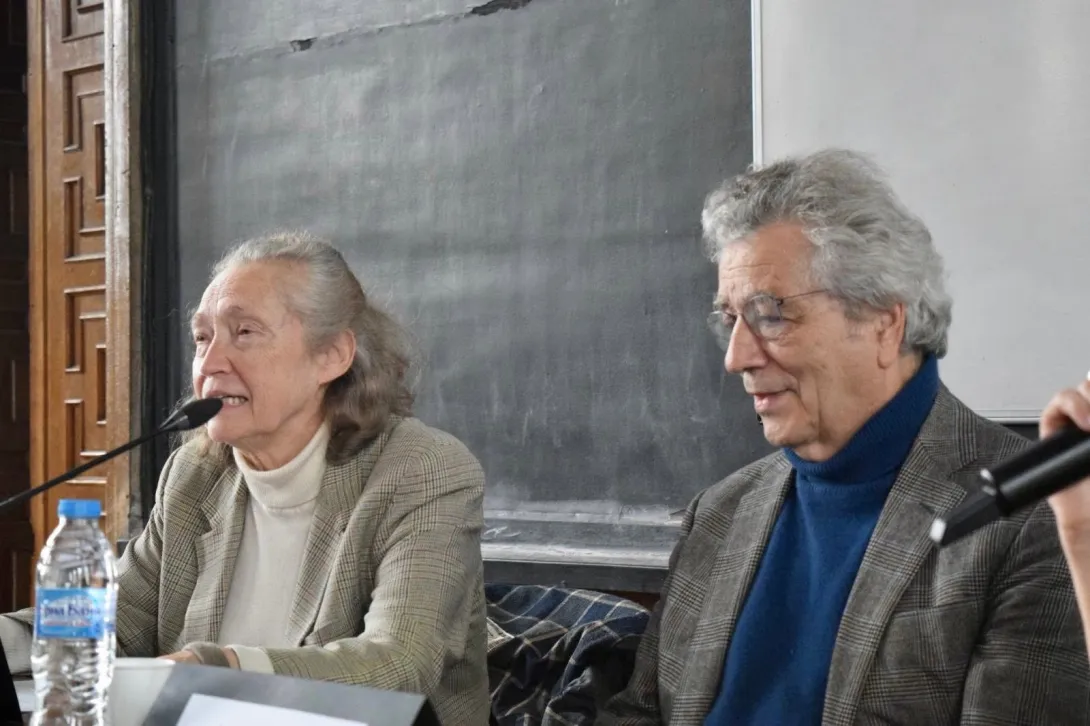
On 31 May 2025, at Sofia University "St. Kliment Ohridski", the fifteenth edition of the Days of Françoise Dolto in Bulgaria was held – "The Baby, the Child and Psychoanalysis". The scientific programme featured Prof. Monika Bogdanova, DSc, and Dr Margarita Tareyn.
The forum is an initiative of Prof. Monika Bogdanova and for fifteen years now has created a space for professional dialogue on the earliest psychical development, perinatality, the relationship between the baby and its parents, childhood, and the psychoanalytic understanding of human development.
The fifteenth edition brought together specialists, lecturers, students, researchers and parents, and among the international participants were Dr Myriam Szejer, psychoanalyst and child psychiatrist from France, Prof. Ghizlane Benjelloun from Morocco, as well as Fabienne D'Ortoli and Michel Amram, who worked with Françoise Dolto and were involved in the founding of the Neuville school.
The scientific programme traced various dimensions of the earliest human experience – from the psychical experience of pregnancy and the perinatal period to the child's development, desire, education, and the relationship with the adult.
Prof. Monika Bogdanova presented the topic "Desire is Born in Lack", and Dr Margarita Tareyn – "The Signs of the Archaic".
Within the forum, Dr Myriam Szejer spoke about "The Perinatal Upbringing of the Baby", Prof. Ghizlane Benjelloun presented "Psychopathology of Pregnancy", and Fabienne D'Ortoli and Michel Amram discussed the experience of the Neuville school and the possibility of thinking differently about the relationships between children and adults.
During the opening, "In the Play of Desire – Part 2" by Françoise Dolto was also presented, along with the collection "The Baby, the Child and Psychoanalysis", edited by Prof. Monika Bogdanova.
The participation of Prof. Bogdanova and Dr Tareyn in the Days of Françoise Dolto is linked to one of the important areas of the Institute's work – mental health in the earliest periods of life and support for the baby, the child and their family.
For the Institute, understanding child development cannot be limited solely to tracking skills, behaviour and age-related indicators. It requires attention to relationships, the body, language, family history, and the way in which the child gradually builds their own place in the world.
The baby and the child are not merely objects of care. They are subjects with their own psychical life, which deserves to be heard, understood and met. It is precisely this perspective that forms part of the clinical, educational and scientific work we develop at the Institute.