
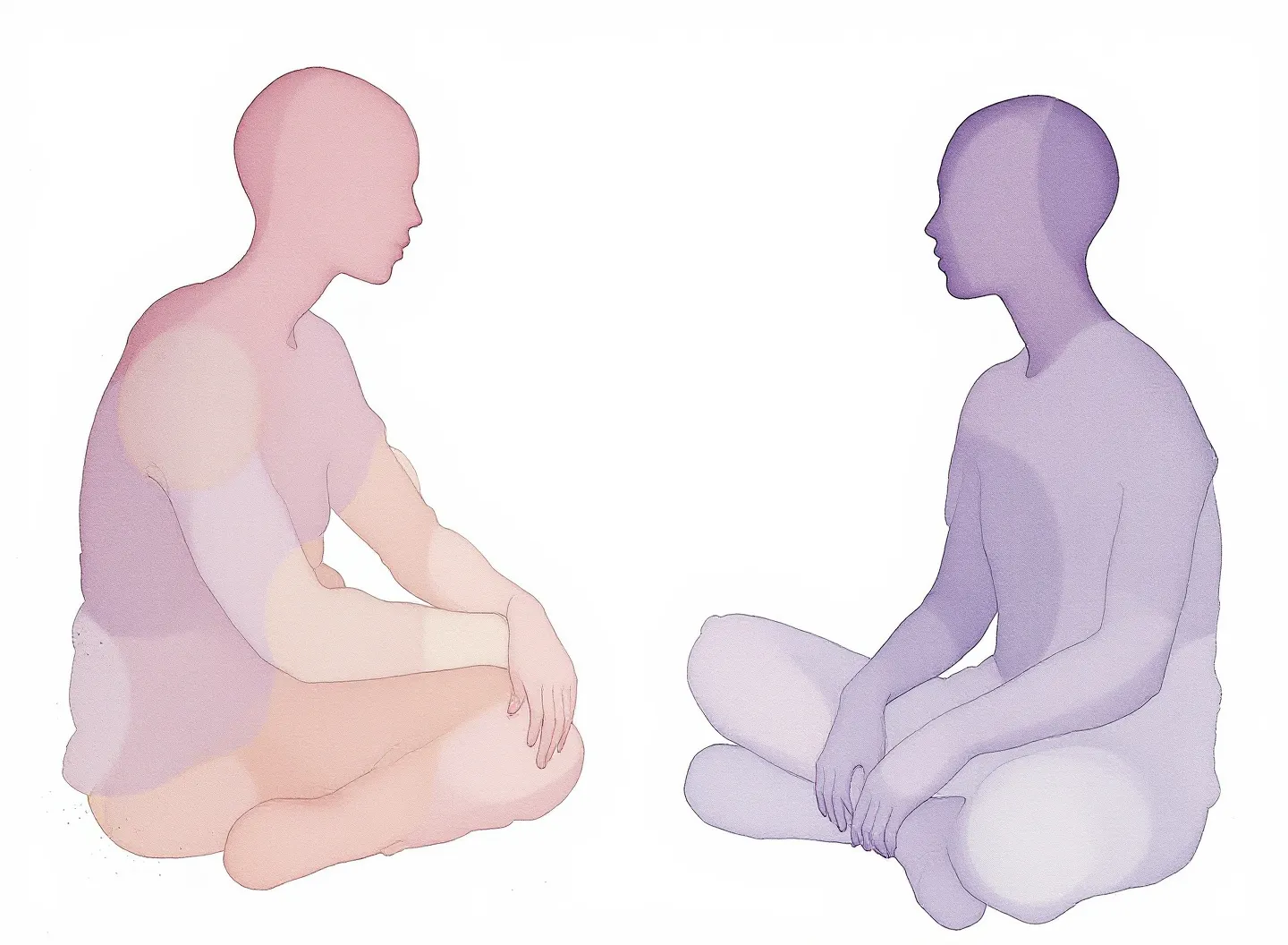
The science of the human being in health, illness and suffering
Clinical psychology is a field of psychological science and professional practice that examines human mental functioning in its relation to health, illness, suffering, adaptation and quality of life. It brings together scientific knowledge of mental processes with clinical assessment, psychodiagnostics, prevention and psychological interventions.
In contemporary understanding, clinical psychology is not confined solely to mental disorders. Its subject matter is considerably broader - how a person experiences themselves and the world; how they react to illness, loss, trauma or prolonged stress; how psychological, biological and social factors interact with one another; how illness changes relationships, identity and everyday functioning; how mental state influences treatment; and how psychological interventions can support adaptation, recovery and quality of life.
This is why clinical psychology stands at the intersection of psychology, medicine, psychiatry, neuroscience and the social sciences.
The American Psychological Association (APA) defines clinical psychology as a discipline specialising in the research, assessment, diagnosis, prevention and treatment of emotional and behavioural disorders. However, contemporary clinical practice increasingly extends this horizon towards the overall functioning of the person in the context of their physical and mental health.
The person is more than the diagnosis they have
One of the fundamental ideas of clinical psychology is that the diagnosis alone does not describe the person.
Two patients with the same medical diagnosis may experience their illness in completely different ways. For one, it may be a temporary obstacle around which they manage to mobilise their resources. For the other, the same illness may become a threat to their identity, relationships, professional fulfilment and vision of the future.
The same applies to mental disorders. The diagnostic category is a necessary tool for clinical reasoning, communication between specialists, treatment planning and scientific research, but on its own it cannot encompass the individual history, personality organisation, resources, relationships and social environment of the particular person.
This is why the clinical psychologist does not ask solely the question “What is the diagnosis?”. They are also interested in other questions: “What is happening to this person?”, “How do they experience what is happening?”, “What factors have contributed to their current state?”, “What is sustaining the suffering?”, “What resources do they possess?”, “How does the illness affect their life, relationships and functioning?”, “What might help them?”
It is precisely this that transforms clinical psychology from a science solely of symptoms into a science of the human being in their biological, psychological and social context.
The biopsychosocial approach to health
Contemporary clinical psychology largely operates within a framework that takes into account the interaction between biological, psychological and social factors. Human health can hardly be understood through only one of these components. Biological state influences the psyche. Pain, inflammation, hormonal changes, neurological disorders, medications, sleep disturbances and chronic illnesses can alter mood, cognitive functioning and behaviour.
But the relationship is not one-directional. Prolonged stress, behaviour, sleep, substance use, adherence to therapy and the way a person perceives their illness can also influence health outcomes.
Alongside this, the person exists within a social environment. Family, close relationships, professional situation, financial security, social isolation, stigma, cultural context and access to health and social services can substantially change both the experience of illness and the possibilities for coping with it.
This perspective does not mean that every illness is “psychosomatic”, nor that psychological factors are the cause of every physical suffering. Such a simplification would be scientifically incorrect.
The meaning is different - human health develops within a system of interacting factors, and good clinical care must take this complexity into account.
What does clinical psychology study?
The subject matter of clinical psychology encompasses a broad spectrum of processes and states. It studies mental disorders, personality functioning, cognitive processes, emotional regulation, coping mechanisms, behaviour, interpersonal relationships, reactions to trauma and loss, adaptation to acute and chronic illnesses, and the psychological aspects of pain, disability, ageing, dying and grief.
Clinical psychology is concerned both with psychopathology and with the person's resources.
Clinical assessment should not represent merely a catalogue of problems. It must also establish what remains intact - capacity for attachment, social support, cognitive resources, motivation, capacity for reflection, values, life roles, previously successful coping strategies.
Because clinical work does not begin and end with the question of what is not functioning. It also includes the question of what we can build change upon.
Clinical assessment
One of the core professional activities in clinical psychology is clinical psychological assessment. It represents a systematic process of gathering, integrating and interpreting information on a person's mental functioning.
Depending on the clinical question, clinical interview, observation, standardised psychological tests, questionnaires, rating scales, cognitive and neuropsychological methods, information from medical records and – when necessary and ethically permissible – information from relatives or other specialists may be used.
The aim is not simply “to administer a test”. The psychological test is an instrument; clinical assessment is a process of professional reasoning.
A result from a depression questionnaire, for example, is not equivalent to a diagnosis. An elevated score must be interpreted in the context of the symptoms, their duration, life events, physical state, medication treatment, functional impairments and the remaining clinical information.
This is why quality clinical assessment requires not merely knowledge of tests, but the ability to integrate the various data into a meaningful clinical picture.
Psychodiagnostics and diagnosis
Clinical psychology has an important role in the assessment of psychopathology and psychological functioning.
Contemporary diagnostic systems provide a common language through which specialists can describe and classify mental disorders. The International Classification of Diseases – ICD-11 of the World Health Organization – represents a global standard for recording and reporting diseases and health conditions. In 2024, the WHO also published the updated Clinical Descriptions and Diagnostic Requirements for mental, behavioural and neurodevelopmental disorders.
But clinical psychology must not be reduced to the assigning of a label.
The diagnosis answers one type of question “Which clinical category do the observed symptoms correspond to?”
The psychological formulation goes further: “Why does this particular person experience these difficulties precisely now, and what provokes, sustains or alleviates them?”
This distinction is fundamental.
The clinical formulation
The clinical formulation is one of the most important tools of professional reasoning. It represents an integrated hypothesis about the person's problems, their origin, the mechanisms sustaining them, the protective factors and the possible directions for intervention.
The formulation may, for example, consider:
- predisposing factors – early experiences, biological vulnerability, personality characteristics, previous illnesses;
- precipitating factors – diagnosis, loss, conflict, traumatic event, life change;
- maintaining factors – avoidance, social isolation, sleep disturbances, catastrophising, family conflicts, ongoing stress;
- protective factors – supportive relationships, stable life roles, motivation, knowledge, adaptive coping strategies, access to treatment.
The formulation is not a final verdict. It is a working clinical hypothesis, which is tested and revised as new information accumulates.
Clinical psychology is not only psychotherapy
One of the common public misconceptions is equating clinical psychology with psychotherapy. Psychotherapy is an important area of psychological intervention, but clinical psychology is considerably broader. The work of the clinical psychologist may include psychological assessment and psychodiagnostics, crisis intervention, psychological counselling, psychotherapeutic interventions in accordance with their qualification, work with families, assessment of cognitive functioning, psychological preparation for medical procedures, support in chronic illness, interventions to improve treatment adherence, work with grief and loss, prevention, scientific research, training and consultation of medical teams.
The question “What kind of therapy does the clinical psychologist conduct?” is therefore only part of the much larger question: “How does clinical psychology understand, assess and support the person?”
Clinical psychology and psychiatry
Clinical psychology and psychiatry share considerable common ground, but they are not the same professional field. The psychiatrist is a physician who, after medical education, specialises in psychiatry. They assess mental disorders within a medical context and may prescribe medication treatment and other medical interventions. The clinical psychologist is a psychologist with specialised training in the clinical field. Their professional tools are psychological assessment, psychodiagnostics, analysis of mental functioning and psychological interventions within the scope of their competence and qualification.
In quality mental health care, these professions should not compete. In severe depression, for example, the psychiatrist may assess the need for pharmacotherapy and medical monitoring, while the clinical psychologist assesses the psychological mechanisms, suicide risk within the scope of their competence, functioning, resources and the need for psychological intervention. In complex cases, the team may also include nurses, social workers, occupational therapists and other specialists.
A complex problem rarely has a single-profession solution.
Clinical psychology in medicine
It is particularly important to understand that the clinical psychologist's place is not solely within psychiatry. Clinical psychology has a substantial role in general and specialised medicine. It finds application in oncology, neurology, cardiology, endocrinology, rheumatology, gastroenterology, dermatology, infectious diseases, reproductive medicine, surgery, transplantation medicine, paediatrics, geriatrics, rehabilitation, intensive care and palliative care.
The reason is that physical illness occurs in the body, but is experienced by a person, and the person has a history, fears, relationships, social roles, responsibilities, ideas about the future and their own way of making sense of what is happening.
The psychological reaction to illness
Receiving a serious diagnosis can be one of the most significant events in a person's life. Reactions vary. There may be fear, anger, anxiety, a sense of injustice, confusion, denial, helplessness, sadness, guilt or a loss of the sense of control. These reactions do not always constitute a mental disorder. Sometimes they are an understandable human response to an extremely difficult situation. This distinction is key to clinical psychology. Not all suffering should be pathologised. The task of the specialist is to distinguish the expected adaptive reaction from a state in which the intensity, duration or consequences of the symptoms require a specific intervention.
Psycho-oncology – an example of clinical psychology in medicine
Psycho-oncology is one of the clearest examples of integrating psychological care into medicine. Cancer does not present the person with a purely biological problem. The diagnosis can change one's relationship with one's own body, sense of security, sexuality, family relationships, professional life, financial stability and outlook on the future. The patient may simultaneously experience physical symptoms, fear of death, anxiety about their children, changes in appearance, difficulties in the workplace and financial problems. If the healthcare system sees only the tumour, part of the suffering remains invisible. Clinical psychology puts the person back at the centre of treatment.
Psychosomatics
Psychosomatics is another area in which clinical psychological thinking is particularly significant. The term is often misused in everyday language as a synonym for "imaginary illness" or "it's all in the nerves". This is a mistaken and potentially harmful understanding. The psychosomatic approach does not deny the biological reality of the symptom. It examines the complex interactions between physiological processes, mental functioning, behaviour, stress and social context. The pain is real. The fatigue is real. The bodily symptom is real. The question is how the different systems participate in its emergence, perception, amplification, maintenance or experience.
Clinical psychology and chronic illness
In chronic illness, the task of medicine cannot always be the complete elimination of the disease. Then the question becomes especially important - how does a person live with it?Diabetes, heart failure, rheumatological diseases, chronic pain, HIV, multiple sclerosis and a number of other conditions require ongoing adaptation. The patient must integrate treatment into their daily life, cope with uncertainty, periodic flare-ups, limitations, medical procedures and sometimes stigma. Here, psychological care can be an essential component of overall treatment.
Adherence to treatment
One of the most important questions in medical psychology is why patients do not always follow recommended treatment. The answer is rarely simply "because they are irresponsible". Non-adherence may be related to side effects, financial difficulties, a complex therapeutic regimen, depression, cognitive difficulties, mistrust, fear, stigma, lack of social support, insufficient understanding of the illness or impaired communication with the medical team. Therefore, the patient's behaviour must be understood before it is evaluated. Clinical psychology can help establish what lies behind the behaviour, rather than simply noting that it exists.
The family is also part of the clinical picture
Illness rarely affects only one person. In serious or chronic illness, the whole family may be forced to reorganise. The partner may gradually become a caregiver. Children may begin to take on roles that do not correspond to their age. The family may experience financial pressure. Relatives may experience anxiety, guilt, helplessness and exhaustion. Therefore, in a number of clinical situations, the question is not only: "How is the patient?" We also need to ask: "How is the family?"
Loss, grief and palliative care
Clinical psychology also has an important place where medicine cannot promise a cure. In palliative care, the goal is not necessarily to prolong life at any cost, but to preserve the best possible quality of life, dignity, control over symptoms and support for the patient and their loved ones. Psychological work may involve fear of death, existential questions, unfinished relationships, guilt, loss of autonomy, changing roles and preparing the family. After death, psychological support may continue in the grieving process. Here, too, the principle applies that grief in itself is not an illness. It is a human response to loss. But sometimes its course can become so severe and prolonged that it requires professional assessment and help.
Children and clinical psychology
In children, psychological suffering often looks different from that in adults. A child may not say: "I am anxious". They may begin to refuse school, become irritable, have sleep problems, regressive behaviour, bodily complaints or a sudden change in behaviour. Therefore, clinical assessment in children requires an understanding of development, the family system, the school environment and the way the child communicates through their behaviour. Working with the child almost always also means working with their environment.
Clinical neuropsychology
Neuropsychology examines the relationships between brain functions, cognitive processes, emotions and behaviour. Clinical neuropsychological assessment may be necessary in neurological diseases, brain injuries, strokes, dementias, epilepsy, neurodevelopmental disorders and other conditions. It may assess memory, attention, executive functions, language, visuospatial abilities and other cognitive processes. But here, too, the person is not merely the result of a test. A cognitive impairment matters precisely because it affects the person's ability to work, care for themselves, communicate, make decisions and preserve their autonomy.
The clinical psychologist in the multidisciplinary team
Modern healthcare increasingly requires collaboration between different professions.
- The physician may be familiar with pathophysiology and medical treatment.
- The psychologist – with mental functioning and behaviour.
- The nurse – with the daily needs and the patient's actual functioning within the treatment setting.
- The social worker – with the family, social, economic and institutional situation.
- The physiotherapist and occupational therapist – with functional recovery and autonomy.
- Each sees a different part of the clinical reality.
The patient is one.
Evidence-based practice
Clinical psychology is a scientific discipline. This means that professional decisions must not be based solely on intuition, personal beliefs or the popularity of a particular approach. Contemporary practice integrates the best available scientific evidence, clinical expertise and the individual characteristics, values and preferences of the patient. This requires ongoing critical evaluation of methods. Not every psychological theory is equally supported by evidence. Not every psychological test is valid. Not every popular therapeutic technique is effective. And not every statement that uses psychological terminology is scientific psychology. The ability to make this distinction is part of the clinical psychologist's professional responsibility.
Ethics, boundaries and responsibility
Clinical work presupposes access to extremely personal information and often takes place at moments of particular human vulnerability. Therefore, professional competence is inseparable from professional ethics. Core principles include respect for human dignity, confidentiality, informed consent, autonomy, avoidance of harm, professional competence and clear boundaries of the professional role. The clinical psychologist must also know their own limitations. Professionalism is not only knowing what you can do; professionalism is also recognising when a case requires another specialist or another type of help.
Prevention is also clinical work
Clinical psychology does not begin only once a person is already in a severe crisis. It also has a place in prevention. Early recognition of psychological distress, risk assessment, support after traumatic events, stress management programmes, interventions for parents and families, psychological preparation for serious treatment and training of health professionals can prevent problems from deepening. A mature health system does not necessarily wait for suffering to reach a critical point before offering help.
Clinical psychology and public health
Although clinical psychology is traditionally associated with the individual patient, its knowledge is also relevant to public health. Mental health is influenced by poverty, violence, social exclusion, discrimination, working conditions, education, housing environment, access to healthcare and a number of other social factors. Therefore, not every human suffering can be resolved in the consulting room. Sometimes the problem is not a lack of psychological resilience in the person, but the environment in which they are forced to live. Clinical psychology must be able to recognise this too.
Clinical psychology as part of contemporary healthcare
Contemporary clinical psychology does not regard mental and physical health as two separate worlds. A person cannot be divided into a "body" that belongs to medicine and a "psyche" that belongs to psychology. This division may be organisationally convenient, but it does not reflect the way people actually become ill, suffer and recover. Therefore, the future of clinical psychology lies in integrated care – in hospitals, outpatient care, mental health services, rehabilitation, palliative care and the community. Care that does not ask only: "What illness does this person have?", but also: "What is happening to the person who has this illness?" This change of question may seem small. In clinical practice, it can change everything.
References used:
- American Psychological Association. APA Dictionary of Psychology: Clinical Psychology.
- World Health Organization. (2024). Clinical Descriptions and Diagnostic Requirements for ICD-11 Mental, Behavioural and Neurodevelopmental Disorders (ICD-11 CDDR). Geneva: WHO.
- World Health Organization. International Classification of Diseases, Eleventh Revision (ICD-11).
- World Health Organization. (2025). Mental disorders – Fact sheet.
- Engel, G. L. (1977). The need for a new medical model: A challenge for biomedicine. Science, 196(4286), 129–136.
- American Psychiatric Association. (2022). Diagnostic and Statistical Manual of Mental Disorders, Fifth Edition, Text Revision (DSM-5-TR).
- Norcross, J. C., VandenBos, G. R., Freedheim, D. K., & Krishnamurthy, R. (Eds.). APA Handbook of Clinical Psychology. American Psychological Association.
- Trull, T. J., & Prinstein, M. J. Clinical Psychology. Cengage.