
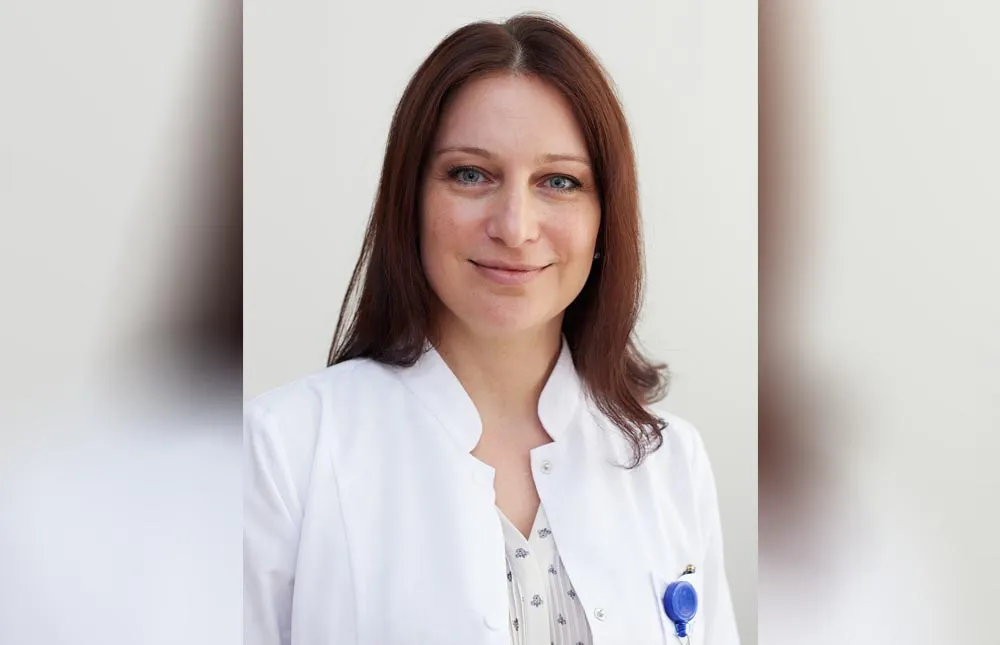
Dr Tareyn, the main enemy of modern man turns out to be stress – every doctor from the various specialities points to it as a risk factor for triggering one illness or another. What are the red flags that show us that stress has already begun to undermine our health?
The times we live in place serious pressure on us. Our lives are focused on achievement, not on experience. Stress seems to have become a trophy we take pride in. I think the red flags are a feeling of being overwhelmed and exhausted, the loss of a sense of satisfaction, lack of patience, haste, and irritability. Those moments when a person lacks the strength and the psychic freedom to live fully. When they feel that their life has been taken over by compulsions and that there seems to be no room for themselves in their own daily life. Physical complaints are also an important indicator – the appearance of various symptoms, some milder and transient, others more serious, such as the worsening of pre-existing complaints. Research into the influence of stress on susceptibility to disease processes confirms this link also in relation to serious illnesses.
To what extent did the pandemic worsen our mental health? What are the most common fears in this respect that further undermine our health?
The pandemic has affected us on a scale that I suspect we still do not fully grasp. It carries with it a very significant source of anxiety and a sense of threat – unpredictability. Anything that falls outside the usual parameters we are used to thinking in, and beyond our familiar boundaries, is a serious challenge for the psyche. There is fear of death, of separation, of losing our loved ones; of the guilt that we might infect someone and that this could lead to a fatal outcome. I think there is hardly a patient who has gone through hospitalisation for COVID who has not, to one degree or another, experienced a confrontation with death. COVID has shown us that we are all vulnerable.
What are biofeedback and the so-called audio-visual entrainment of brainwaves, as therapeutic procedures, and in which illnesses and conditions are they applied?
These are therapeutic procedures in which, with the help of software programmes and specially designed devices, non-pharmacological regulation of the functioning of the nervous system and the involuntary processes in the body is achieved. Worldwide, they are widely used in the treatment of symptoms such as chronic pain, fatigue, insomnia, increased anxiety, depression, hypertension, difficulties with cognitive functions, and others. They are applied by specialists trained to work with them.
How are the procedures themselves carried out?
During a biofeedback training session, special sensors are attached to the body, which send signals to a monitor that reflects heart rate, breathing, skin temperature, perspiration and muscle activity through sounds or lights. In this way, stress reactions are visualised directly, in the moment and with the intensity at which they arise. On the basis of this direct feedback, biofeedback training enables the patient to be trained to achieve control over the involuntary bodily reactions provoked by stressful experiences, as part of the therapy for a number of illnesses. The procedures for audio-visual entrainment of brainwaves are neuro-relaxational and do not require activity on the part of the patient. Specific light and sound pulses are delivered to the brain through glasses with built-in LEDs and headphones. By changing the rhythm and other parameters of this sensory stimulation, a gradual shift in brain arousal is encouraged towards states of deep relaxation, sleep, calm concentration, or toning of the nervous system. The device operates on various programmes, specifically targeted at the particular symptomatology.
Does biofeedback have a place in your practice with patients with oncological illnesses as well?
In oncology patients, we use biofeedback to alleviate symptoms such as chronic pain, fatigue, insomnia, conditioned nausea and vomiting, and increased anxiety related to medical interventions (for example, claustrophobic reactions during MRI scans, panic attacks associated with certain procedures, etc.). This helps to reduce the negative effects of these complaints on the patient's quality of life and their coping with treatment, while avoiding additional pharmacological burden and achieving an effect faster than, for example, that which might result from psychotherapeutic work. In patients with other illnesses additionally influenced by psychological factors, or those with milder psychosomatic complaints, the procedures are used to increase the patient's awareness of their bodily sensations and reactions, and to regulate changes such as increased heart rate, blood pressure, rapid breathing, and so on. Another very significant application of these procedures is the possibility of examining unconscious bodily reactions in connection with certain emotional experiences. Thanks to them, we can directly register the bodily changes that occur in connection with certain painful or anxious thoughts, memories, associations, and so on.
What states does a person go through when they hear their diagnosis – cancer?
A state resembling shock and confusion usually sets in, along with an inability to think clearly. All kinds of frightening thoughts and painful feelings flood in. The sense of security is lost, one's notions of life feel shattered. Strong sensations of threat, loss and instability appear. Some people say that after being told the diagnosis, they don't even know how they managed to get home. Or that they had the feeling of a complete loss of ground beneath their feet, even of going mad. At this moment, a person has a critical need for something to hold on to, someone to lean on. That is why it is so important that, when communicating the diagnosis, doctors must inform the patient of the possible options, however unclear they may still be, in order to give them some tangible sense of support, of a way forward from here – that is, to offer the patient the potential thing they can hold on to.
What is the most difficult moment for every patient, and why?
There are three critical moments – the first is the one after the illness has been diagnosed, before treatment begins. This is the moment of uncertainty – waiting for results, gathering opinions, searching for a hospital, fears about the treatment ahead, and so on. The other critical moment is the appearance of a relapse or the identification of disease progression. This is where despair sets in. Patients' feeling is usually one of the futility of their efforts, of losing trust in the treatment and in themselves. Hope begins to seem like naivety. The third and most critical moment is the exhaustion of treatment options. A very key issue psychologically here is the patient's feeling of being abandoned.
When is the intervention of an onco-psychologist, such as yourself, most effective?
In recent years, together with colleagues who work in the field of psycho-oncology, we have been fighting for psychological help to be not an exception, but an accompanying part of medical treatment. These initiatives were begun a long time ago by the Association of Patients with Oncological Diseases. Psychological help has its place at every stage of the illness – from diagnosis, through active treatment, to palliative care. Each of these stages confronts the patient and their loved ones with specific difficulties, and coping with them can be significantly aided.
Are suicidal moments common among patients with oncological, incurable illnesses and in the terminal stage? How can relatives recognise that a person is in such a critical moment of their life?
Suicidal thoughts in patients with advanced illness are generally rare and are usually related to poor control over symptoms. These are also the most common reasons for expressing a wish for euthanasia. They can also be due to underlying depression or be provoked by feelings of helplessness, inadequacy, and the patient's worry that they are a burden to their loved ones. When they appear, they are more like thoughts that pass through the mind, or remarks that a person occasionally makes, but it is rare for them to actually be carried out as an actual suicidal act. These thoughts sometimes accompany the fears associated with the illness and the process of dying, that is, they are a kind of reassuring attempt to retain control over death. Here I would like to emphasise that advanced illness is not necessarily associated with depression, still less with suicidal thoughts, and when such complaints do occur, they must be taken into account just as with healthy people – as a separate issue that should be addressed. Towards the end of their lives, many people manage to be in good spirits. In any case, suicidal thoughts signal an insufficiency, a breach in the care provided to the patient in some aspect of it – medical (insufficient control over symptoms, lack of connection with a supportive physician figure who is, for the patient, a source of security and a means of reducing anxiety), or psychological – some lack in the emotional connection with the patient and in responsiveness to their needs at that moment. In other words, suicidal remarks are a cry for help.
How can psycho-oncology change the attitude of the cancer patient towards their illness, towards the pain, towards the total collapse in their life associated with helplessness and dependence on the care of loved ones?
The onset of illness causes “fractures” in various areas of a person's life, which are specific to each patient. Our work is to discover exactly where the important “fracture” lies for the individual patient, and to help them repair, restore something around them – through making sense of their notions, feelings or actions. We strive to limit the scope of the sense of collapse, as you put it, to prevent it from spreading, and to help the patient discover their own possibilities, to return to their own strengths, so that they may begin to build something again, sometimes even in a better way than before.
Does oncological illness have a destructive effect on personal and family relationships?
Illness usually strengthens and deepens relationships within the family. It often becomes an occasion for old conflicts to be overcome, for people to meet each other in a different way and to grow much closer. But it can also exacerbate long-standing problems. Illness is the litmus test for relationships – the truth about them comes to light.
How should family and friends behave towards a loved one with a serious oncological illness?
The most important thing, when we are around someone who is ill or suffering, is to be able to match their state and needs. And not to confuse them with our own! To be there with them, wherever they are. To accompany them as they walk the path towards what is good for them at this moment. Not to impose ourselves, not to get ahead of them. Sometimes relatives, with the best of intentions to help, can actually turn out to be quite inappropriate – pressuring them, imposing cheerfulness and life on them when they feel so far removed from it, blocking the expression of their grief and fears, treating them like a helpless child, and so on, and ultimately, through all this, leaving them completely alone in their experience. These things are a very common cause of the depressions associated with illness. And if we want to understand more about what this person is really going through (as in our other relationships too), we must be able to let them speak – without being interrupted, lectured, or advised. To be able to truly hear them. In fact, a very large proportion of psychotherapeutic work itself consists precisely in this.
Source: zdrave.to