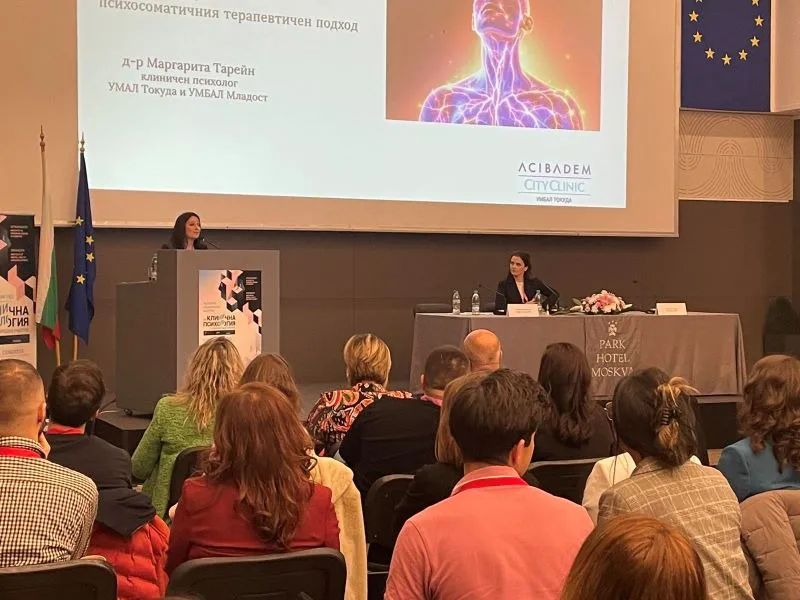
Dr Margarita Tareyn and specialists from the team of the Institute of Medical Psychology, Psycho-Oncology and Psychosomatics took part in the scientific programme of the Congress of Clinical Psychology, which brings together specialists from various fields of mental health and places at its centre the dialogue between clinical psychology, psychotherapy, medicine and public health. The team's participation was concentrated in two of the congress's important thematic areas – psychosomatics and psycho-oncology – presenting various aspects of clinical work with people suffering from severe and chronic illnesses and their families.
Dr Margarita Tareyn was the moderator of the first scientific session, "Words Between the Bodily and the Psychic", in which she also took part with two of her own scientific presentations. In the paper "The Bodily Expression of Psychic Suffering – Features of the Psychosomatic Therapeutic Approach", she examined the connection between psychic experience and bodily symptom, as well as the specific character of therapeutic work in the field of psychosomatics.
Within the same session, Dr Tareyn also presented the topic "Clinical Practice with Severely and Terminally Ill Patients and Their Relatives", addressing some of the most complex areas of psychological care – the encounter with severe illness, the limitations of treatment, suffering, loss and the need for professional support both for the patient and for their family.
In the same scientific session, Prof. Dr Sc. Monika Bogdanova presented the topic of "Childhood Psychosomatics", while Aleksandar Milanov spoke about clinical social work in hospital settings. In this way, the programme placed bodily and psychic experience within a broader clinical context – from early childhood to severe illness and work with patients in a hospital environment.
A separate scientific session of the Congress was devoted entirely to psycho-oncology, moderated by Dr Margarita Tareyn together with Ekaterina Vitkova. The programme addressed the communication between the medical team and the oncology patient, psychic resilience and coping strategies, psychological assessment and interventions in psycho-oncology, the psychic experience of cancer, and the role of patient support. Within this session, Aleksandar Milanov presented the topic "Children and Questions of Illness and Death" – one of the especially difficult aspects of working with families affected by severe illness.
The participation of Dr Tareyn and the team in the congress reflects the understanding on which the Institute's work is built – that the bodily and the psychic cannot be regarded as two independent worlds, especially when a person is going through a severe, chronic or life-threatening illness. The psychologist, the psychotherapist and the clinical social worker have different professional roles, yet they can be part of a single, shared system of care that takes into account not only the diagnosis and treatment, but also the way in which illness changes a person's life, relationships, identity and future. It is precisely this connection between clinical practice, scientific knowledge and an interdisciplinary approach that is among the main directions the Institute of Medical Psychology, Psycho-Oncology and Psychosomatics develops in its work.